
Winter changes the trails: snow hides obstacles, ice reduces traction and cold makes every breakdown more serious. With a little preparation, ATV riding stays enjoyable in every season. Here are 11 tips from our Canada Safety Council courses, grouped in three steps: before you leave, on the trail and when you stop.
Before you leave
1. Check the weather
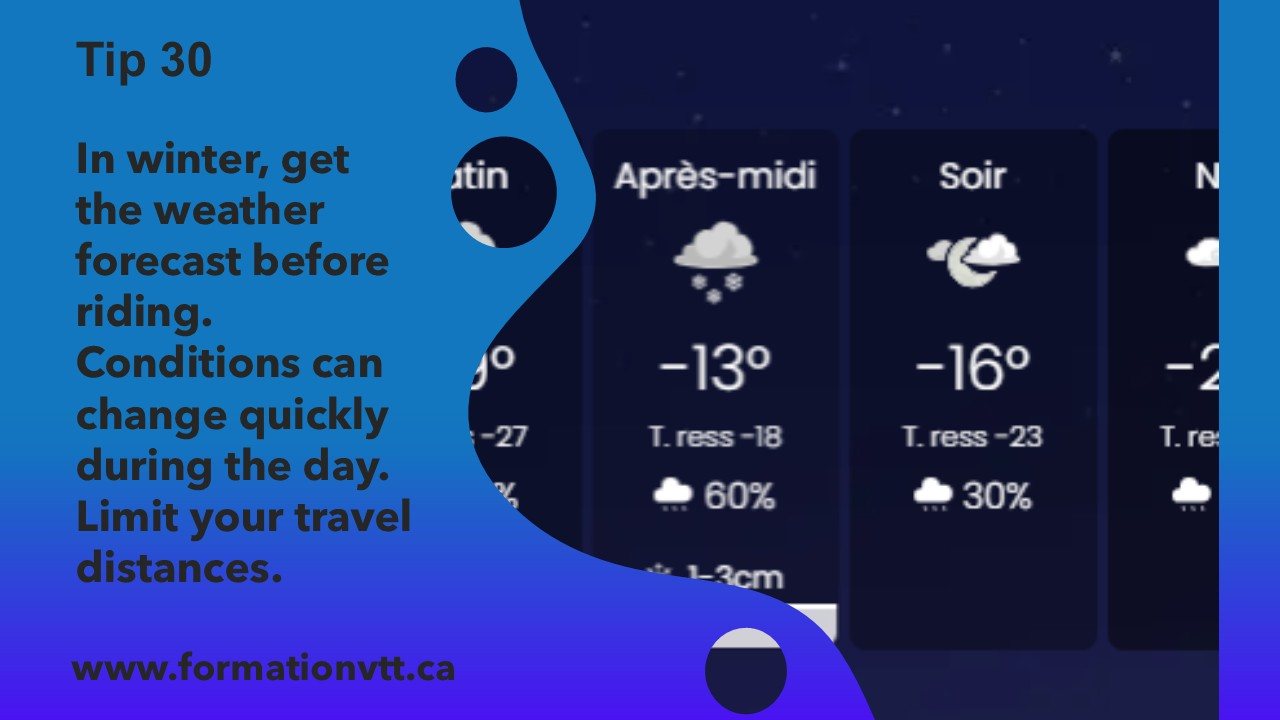
A storm, a sudden temperature drop or a thaw completely changes conditions. Check the forecast for the whole ride, and tell someone where you are going and when you plan to be back.
2. Keep the fuel tank full
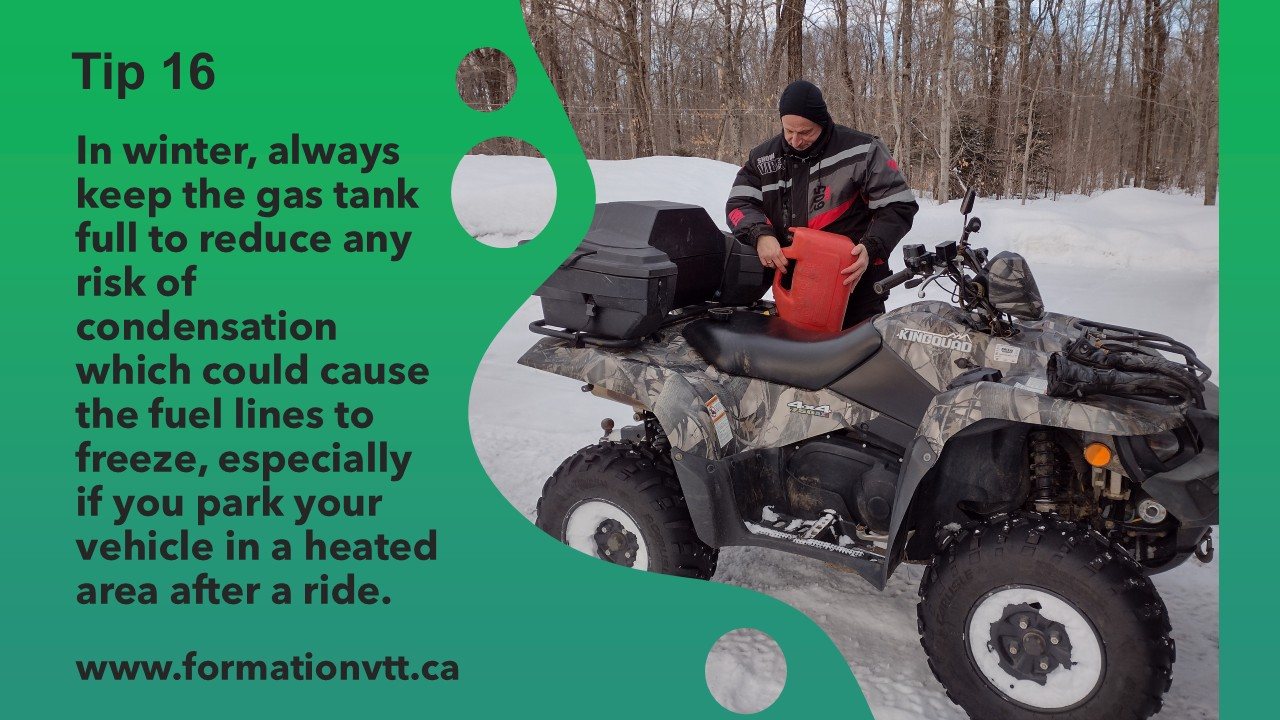
A full tank leaves less air, so less condensation and less risk of water in the fuel. It also gives you a margin if the ride lasts longer than planned.
3. Plan for more fuel in wet snow
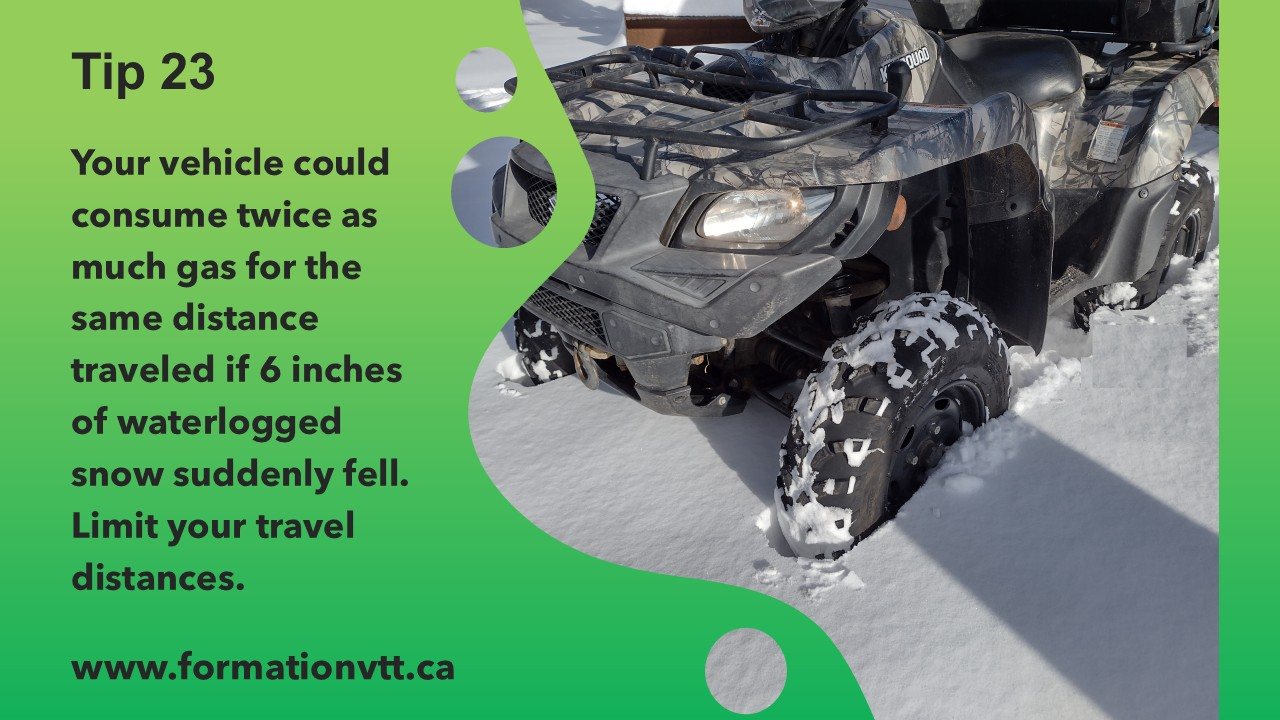
Heavy, wet snow makes the engine work much harder. Fuel consumption can rise sharply: bring extra fuel and plan your return accordingly.
4. Check the nuts and moving parts of your tracks
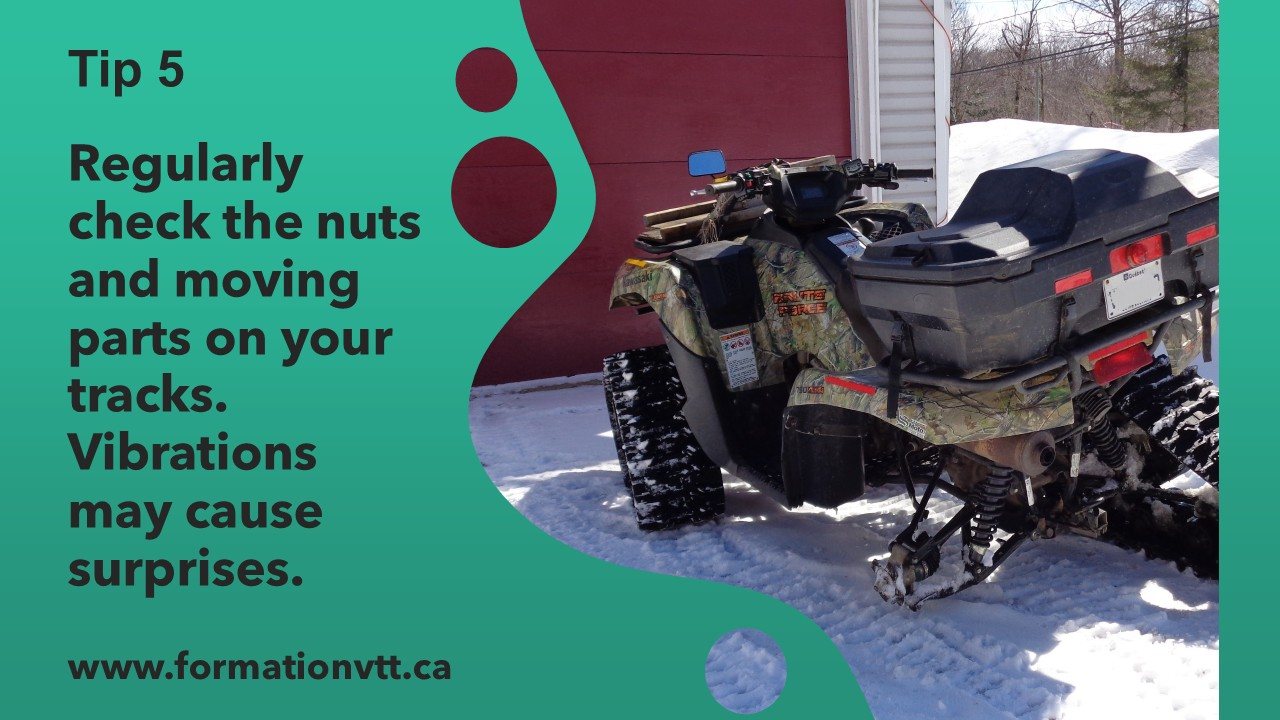
If your ATV has tracks, check that the nuts are tight and the moving parts are in good shape before every ride. Vibration and cold can loosen the mounting, and a breakdown far from help is hard to fix.
On the trail
5. Stay on marked trails
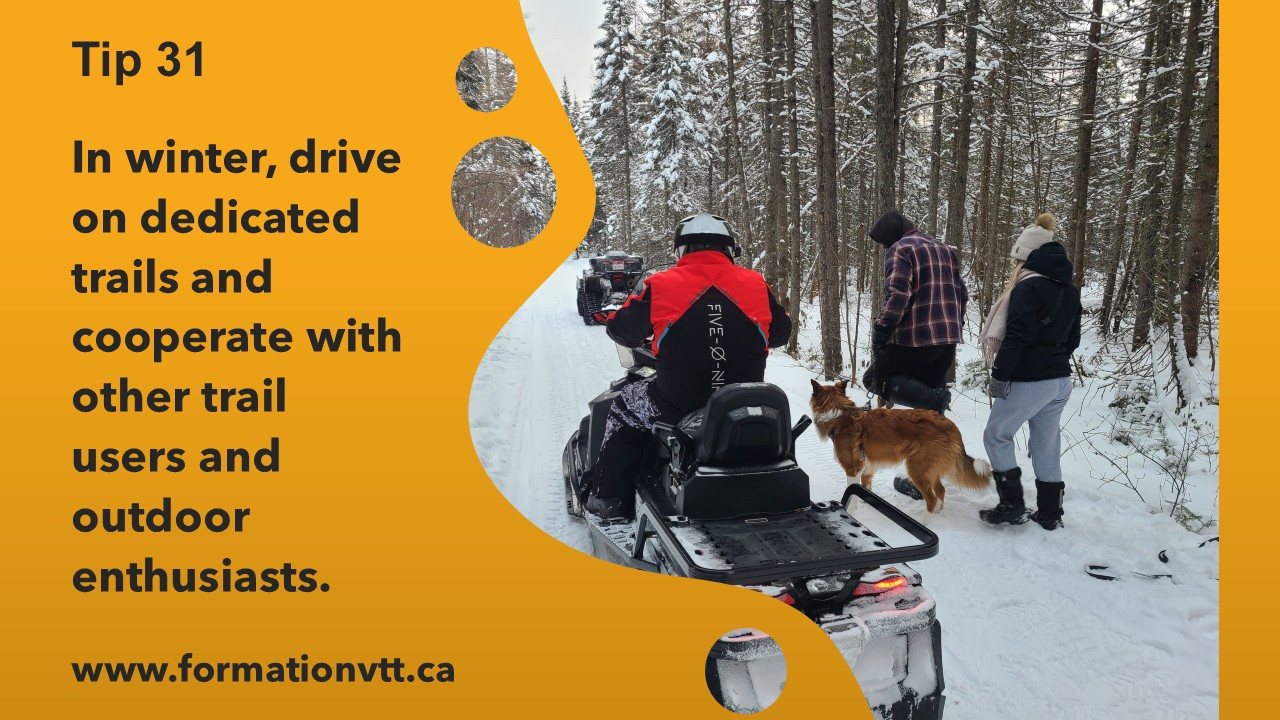
Marked trails are maintained and known to rescue services. Off trail, snow can hide ditches, streams or fences, and it is much harder to find you if something goes wrong.
6. Stay close to inhabited areas
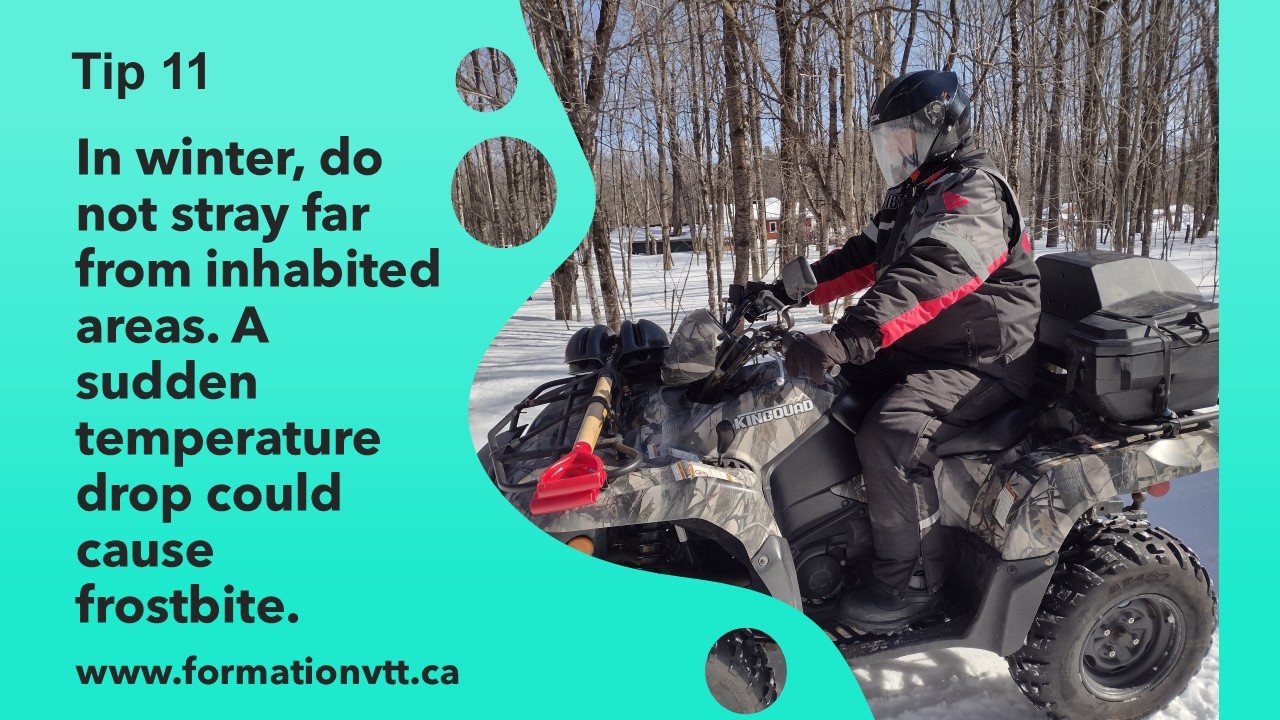
In winter, a breakdown or an injury quickly becomes dangerous because of the cold. Choose routes that stay within a reasonable distance of homes and roads, and never ride alone.
7. Avoid frozen lakes and rivers
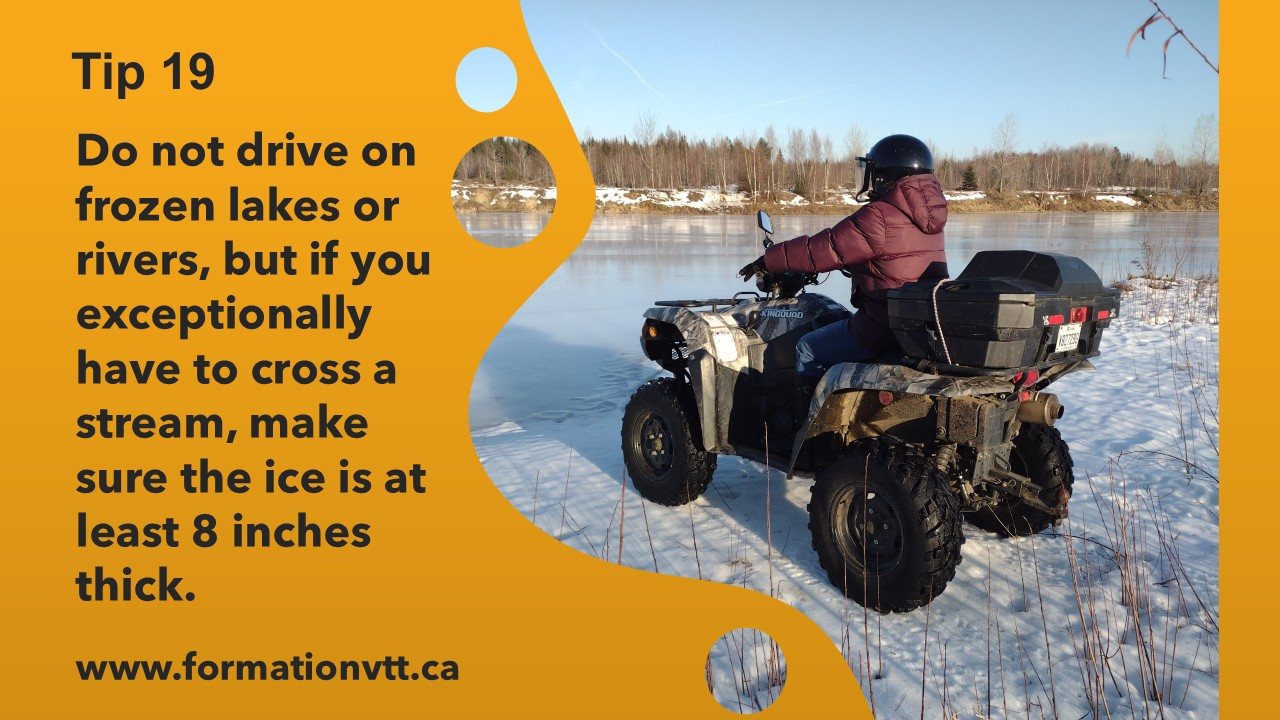
Ice thickness varies a lot from one spot to another, especially near currents, river mouths and docks. Ice that looks solid can give way under the weight of an ATV. The safest choice is to stay off it.
8. Stay alert: snow hides hazards
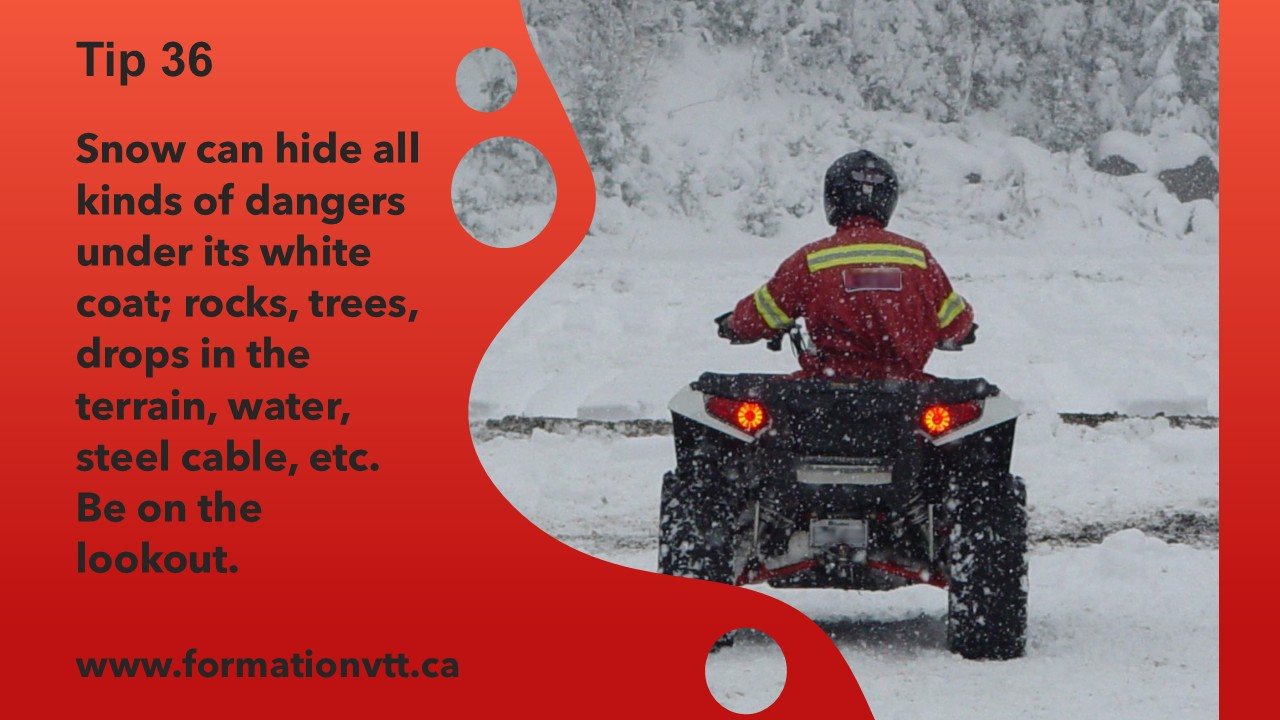
Rocks, stumps, holes and branches can lie just under the snow. Slow down, especially on a trail you do not know, and keep a safe distance from the vehicle ahead.
9. Watch out for icy surfaces
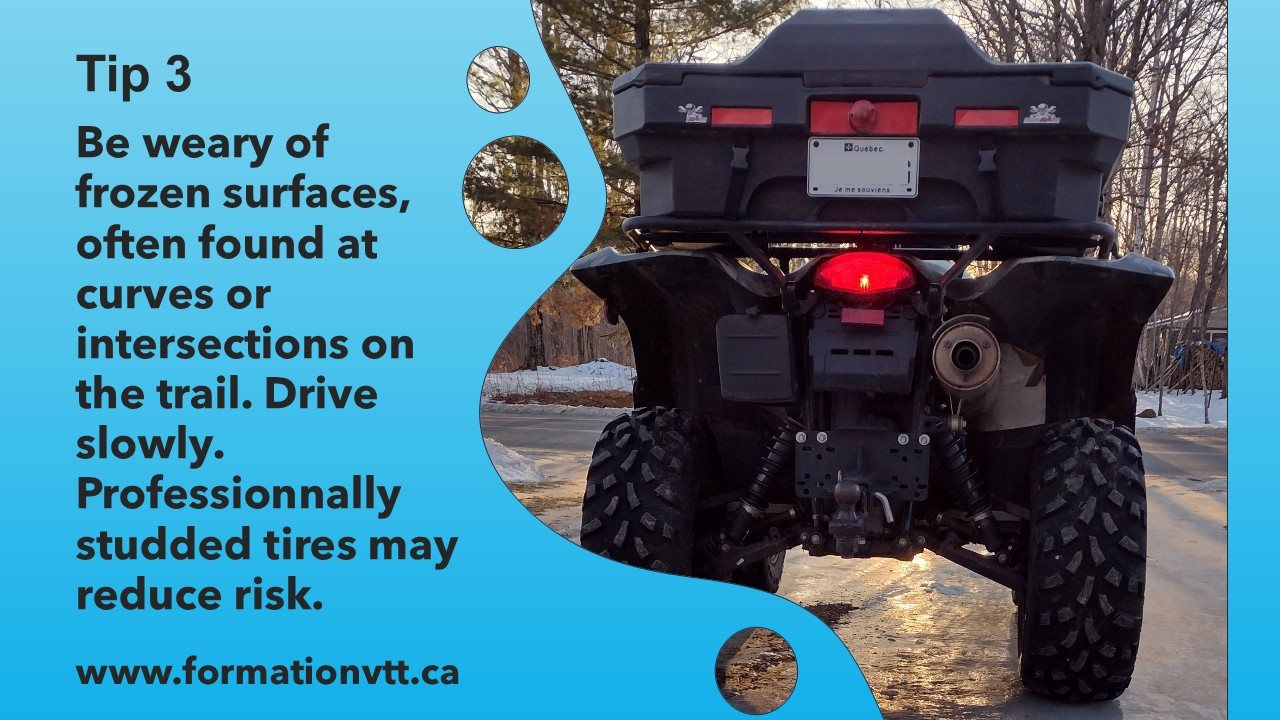
On ice, braking and steering lose much of their effectiveness. Slow down before you reach it, avoid sudden moves and brake gently.
10. Slow down in shaded areas
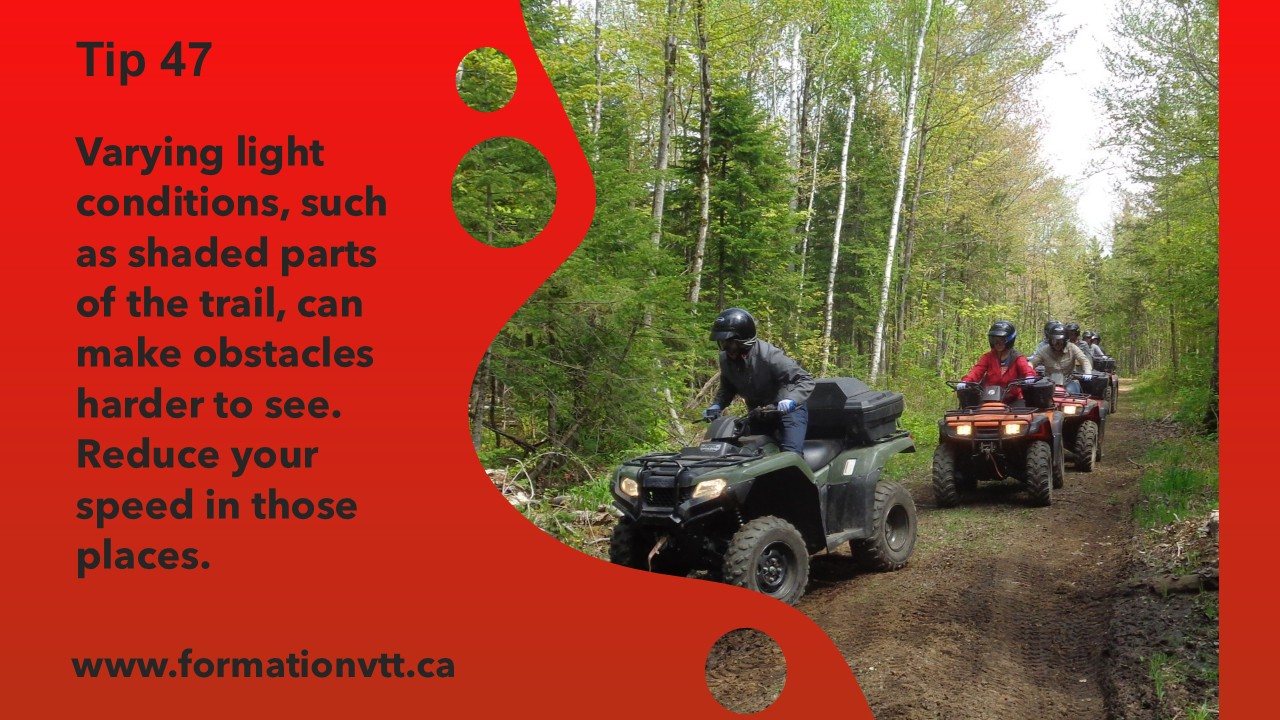
Where the sun does not reach, snow melts less and ice lasts longer. A trail that is dry in the sun can turn slippery a few metres farther, in the shade of the trees.
When you stop
11. Don’t leave the parking brake on
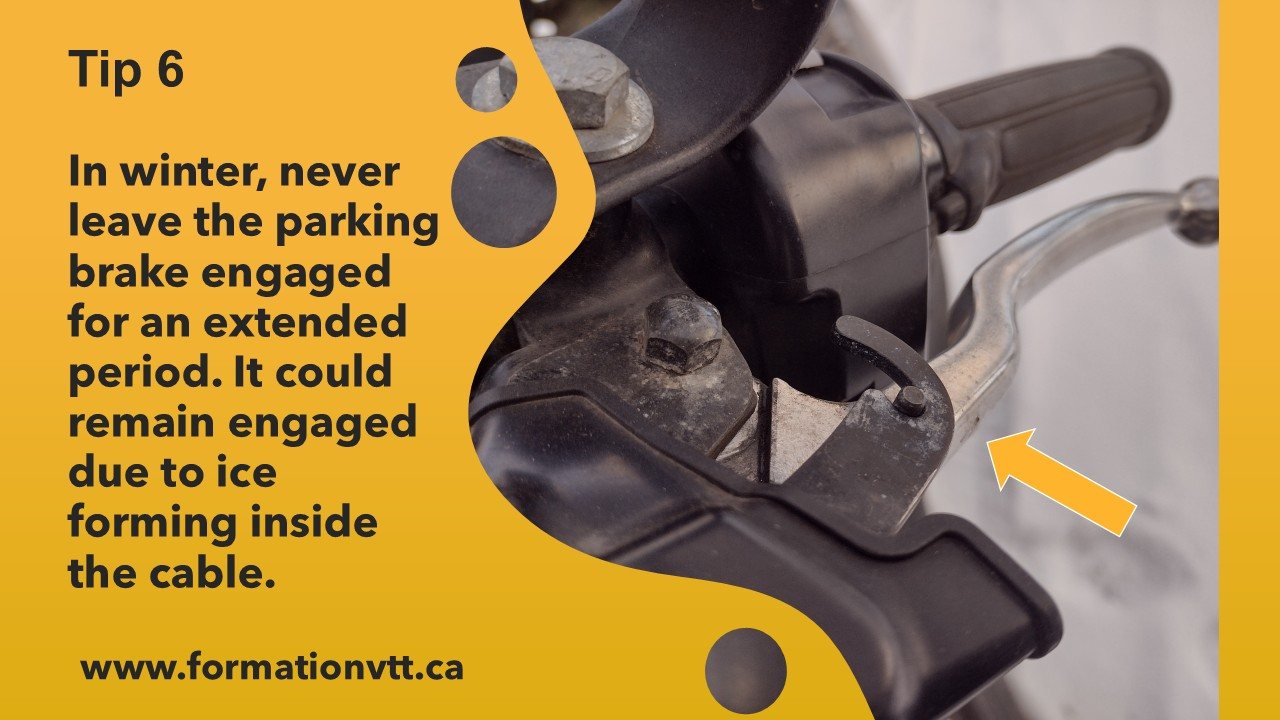
In extreme cold, moisture can freeze the mechanism and lock the wheels. For a long stop, put the transmission in park or in gear instead, on level ground.
Learn to ride in every season
Our ATV, side-by-side and snowmobile driving courses prepare you for real Quebec conditions, with a Canada Safety Council master instructor. You leave with a certificate valid for 3 years.
Book my training · Snowmobile training for workers · ATV winch safety: 8 tips
